
Xiaomi 33W 10,000mAh Power Bank Review for Quest
This inexpensive Xiaomi power bank delivers excellent efficiency and enough output for Quest, but BOBOVR’s magnetic system is still easier to live with.
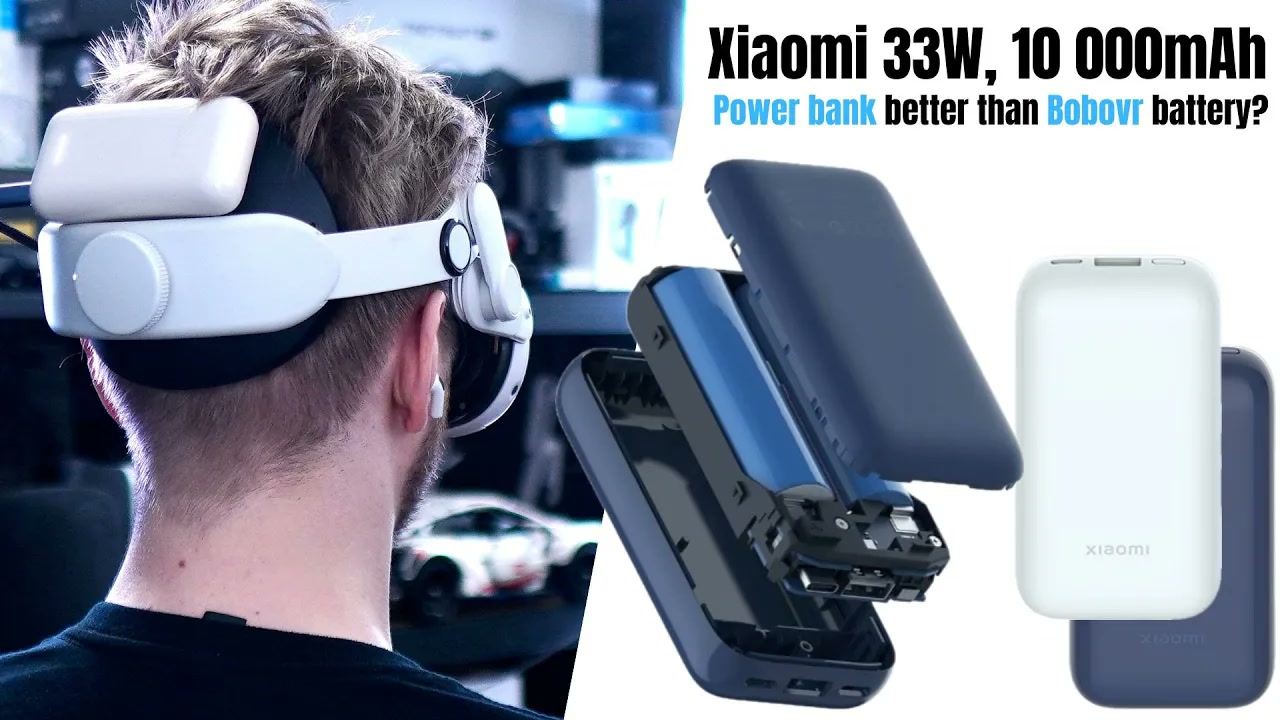
Want the full version? The video review includes all the demonstrations, comparisons and extra details that are easier to show than describe.
Watch the full review on YouTubeDisclosure: I bought this Xiaomi power bank for $15 in a promotion. Prices are from the review date. I use affiliate links always when they are available. If you buy through one of them, I may earn a commission at no extra cost to you.
Quick verdict
The Xiaomi 33W Power Bank 10000mAh Pocket Edition Pro is a very good Quest battery. I measured 33 Wh delivered from a manufacturer-rated 36 Wh, it provides more power than Quest needs, and its roughly 200 g weight makes it a useful rear counterweight. At a local MSRP of $19—and the $15 promotion I used—it offered excellent value.
Is it better than BOBOVR B100? If you are starting with no battery ecosystem, the Xiaomi is much cheaper. If you already own BOBOVR’s magnetic head-strap base and charging dock, B100 remains my preferred setup. Its magnetic mounting is far more convenient, the battery is smaller, and the dock charges it faster.
Pros
- Excellent value at the review-date price
- High efficiency - approximately 92%
- Up to 33 W USB-C output is more than Quest needs
- About 200 g makes a useful head-strap counterweight
Cons
- Velcro or a printed holder is less convenient than magnetic mounting
- Cable charging is slower than B100 on its magnetic dock
- Price varies considerably by region
Capacity and efficiency
Xiaomi rates this power bank at 36 Wh. In my discharge test I measured 33 Wh, which works out to roughly 92% efficiency. That is a strong result. In the same type of test, I measured about 89% from BOBOVR B100, and many battery head straps have performed worse.
 I measured 33 Wh delivered from the manufacturer-rated 36 Wh.
For a practical example, if a game gives you two hours from the Quest battery alone, adding this power bank should bring total play time to over 5 hours. That is roughly the same total runtime I expect from BOBOVR B100.
The USB-C output is rated up to 33 W, considerably more than Quest requires. That does not mean the internal Quest battery will remain at 100%. On the firmware I tested, Quest normally discharged to around 70% and then stayed there to protect the battery. Meta uses A/B testing, so another headset or firmware version may behave differently.
Charging speed and continuous play
A complete charge took about two hours and 45 minutes. The charging graph showed that the final 20 minutes added very little energy, so most of the usable capacity arrived sooner. In the direct comparison section, the useful fast-charge window was about two hours and 20 minutes, compared with roughly four hours for a B100 charged without its magnetic dock.
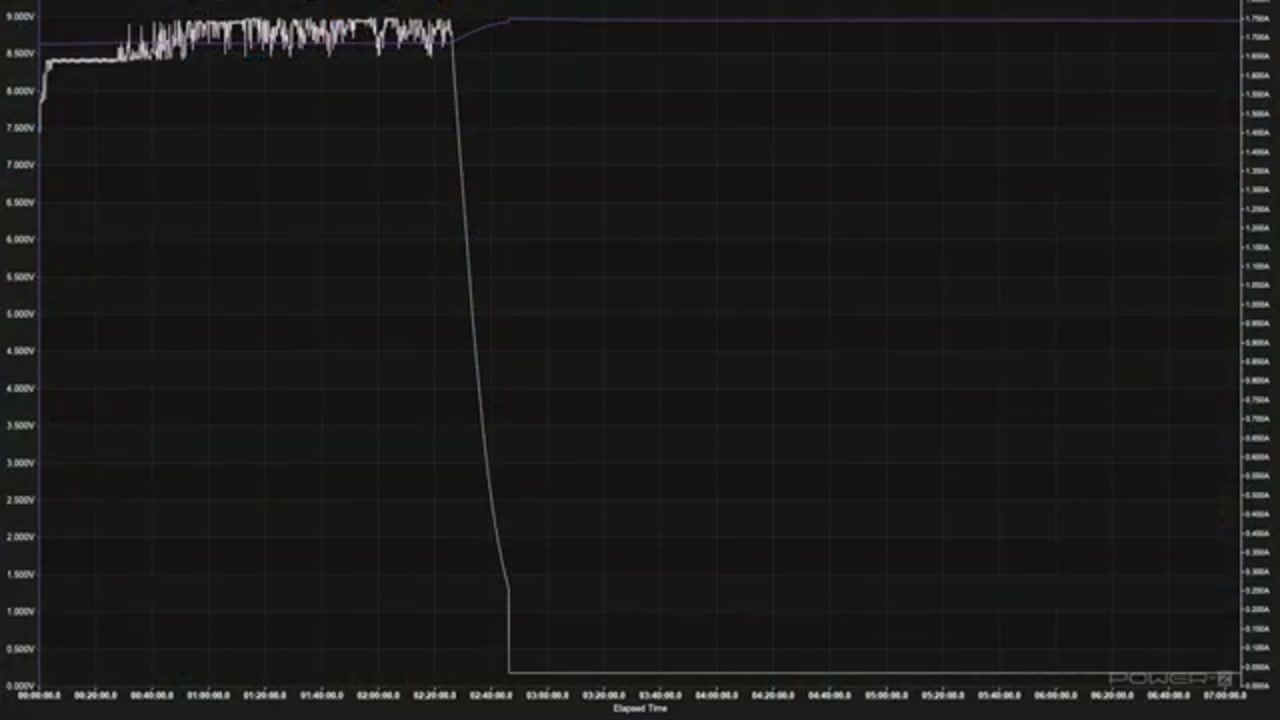 Most of the capacity returned before the slow final part of the charge.
This is fast enough to rotate two Xiaomi batteries indefinitely. When one is empty, connect it to the charger and attach the second one to the headset. The first should be ready by the time the second is exhausted.
Mounting it on a head strap
The shape works well on the back of a Quest head strap, and the roughly 200 g weight balances the headset. I usually prefer strong self-adhesive Velcro because it is cheap and easy to adapt to different straps. A 3D-printed holder can look cleaner, but it is not necessary.
 Its shape and 200 g weight work well at the rear of a strap.
This is also the Xiaomi’s biggest usability compromise. BOBOVR’s battery snaps into place magnetically, while the Xiaomi needs Velcro, a holder and a cable. Both work, but the magnetic solution is faster and more pleasant every time I put the headset on or swap a battery.
Xiaomi versus BOBOVR B100
The better choice depends on what you already own.
If you already have a BOBOVR magnetic base on the strap and a compatible charging dock, B100 is better. The magnetic charger is faster than charging the Xiaomi by cable, the mount is much more convenient, and B100 is smaller. That size difference is not a game changer at home, but smaller hardware is always useful when traveling.
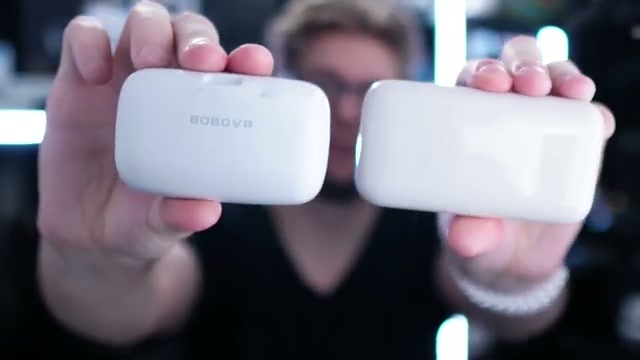 B100 is the more compact battery.
If you own none of that equipment, the Xiaomi is the better value. B100 is more expensive even before adding other hardware from the ecosystem. A B100U upgrade kit with battery and mount cost around $50, and the BD3 dock needed for full-speed magnetic charging was another $40.
I still use my BOBOVR batteries on several straps, including setups where I attached a B100 base with Velcro. It is a better overall setup than this Xiaomi, but it is substantially more expensive (most of it I received for free with other head straps from Bobovr).
Should you buy it?
Buy the Xiaomi if you want a high-capacity Quest battery without paying for a proprietary ecosystem. Its efficiency, powerful, weight and recharge speed all worked very well in my tests. At $19 locally—or the $15 promotion I found—it was fantastic value.
Choose BOBOVR B100 instead if you already own the magnetic hardware or care more about easy swaps and compact size than cost. The Xiaomi wins on value; the complete BOBOVR system wins on convenience.
Watch my original Xiaomi power bank comparison
Interested in Xiaomi 33W Power Bank 10000mAh Pocket Edition Pro?
These product links are kept in the shared catalog so I can verify and update them in one place.